Local Receiving Accounts vs SWIFT: How Cross-Border Transfers Actually Work
Understand correspondent banking deductions, wire settlement delays, and why domestic ACH/SEPA virtual accounts save businesses thousands in transaction friction.
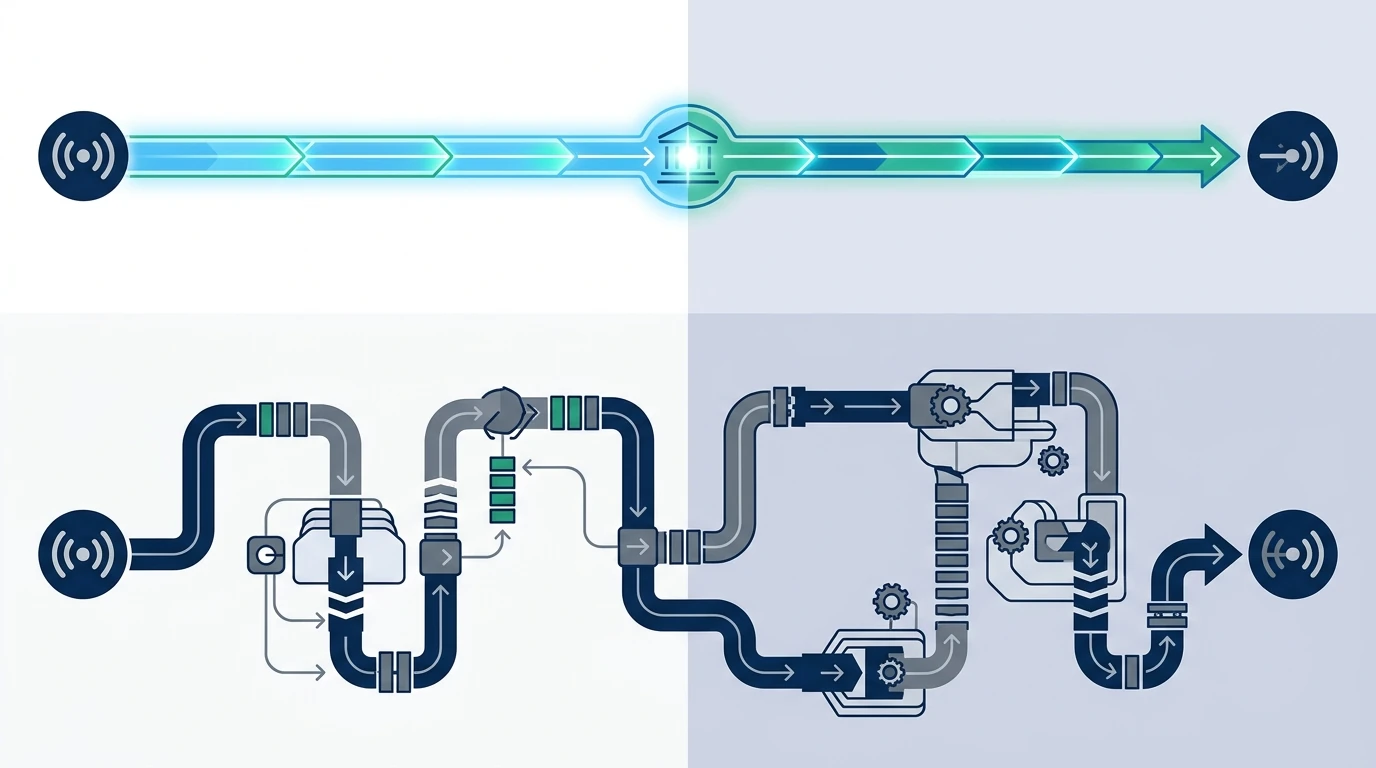
When an overseas enterprise client or marketplace pays your company, the transfer travels across one of two fundamentally distinct infrastructures: the domestic clearing network of the payer's home country, or the international SWIFT correspondent network.
1. How the International SWIFT Network Operates
The Society for Worldwide Interbank Financial Telecommunication (SWIFT) does not actually transfer money; it transmits authenticated payment instructions between member banks. Because most local commercial banks have no direct relationship with foreign banks, payments route through intermediary correspondent institutions.
Sender Bank (Munich) → Intermediary 1 (Deutsche Bank Frankfurt) → Intermediary 2 (JPMorgan Chase NY) → Beneficiary Bank (San Francisco).
Consequence: Each intermediary institution takes a $15 to $35 slice of the funds, and the transaction takes 2 to 5 business days to clear.
2. Virtual Local Receiving Accounts (The Domestic Clearing Alternative)
Fintech multi-currency platforms solve the SWIFT problem by creating dedicated virtual account numbers tied directly to domestic payment rails inside each sovereign market:
Routing (ABA) + Account number on ACH & Fedwire. Free local deposit.
Dedicated European IBAN on the SEPA / SEPA Instant network. Clears in seconds.
Sort code + Account number on the UK Faster Payments system. 24/7 instant settlement.
When an overseas customer pays you via their local clearing rail, their domestic bank processes it as a free local transfer. Zero intermediary deductions, zero customer wire fees, and guaranteed full-amount invoice settlement.
Related Commercial Guides & Jurisdiction Banking
Calculate your exact payment transfer fees
Run our decimal-safe calculator with your real monthly volume.